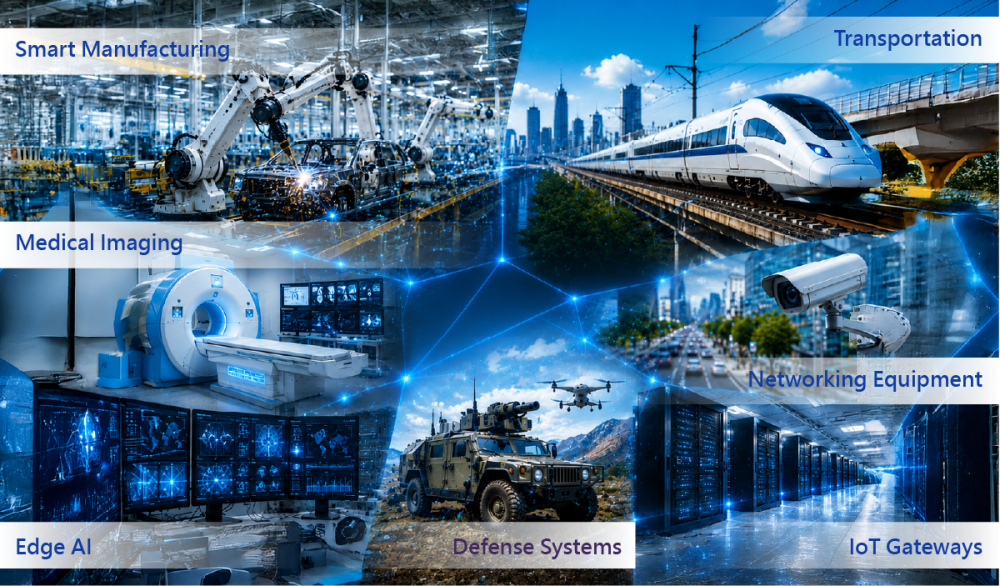
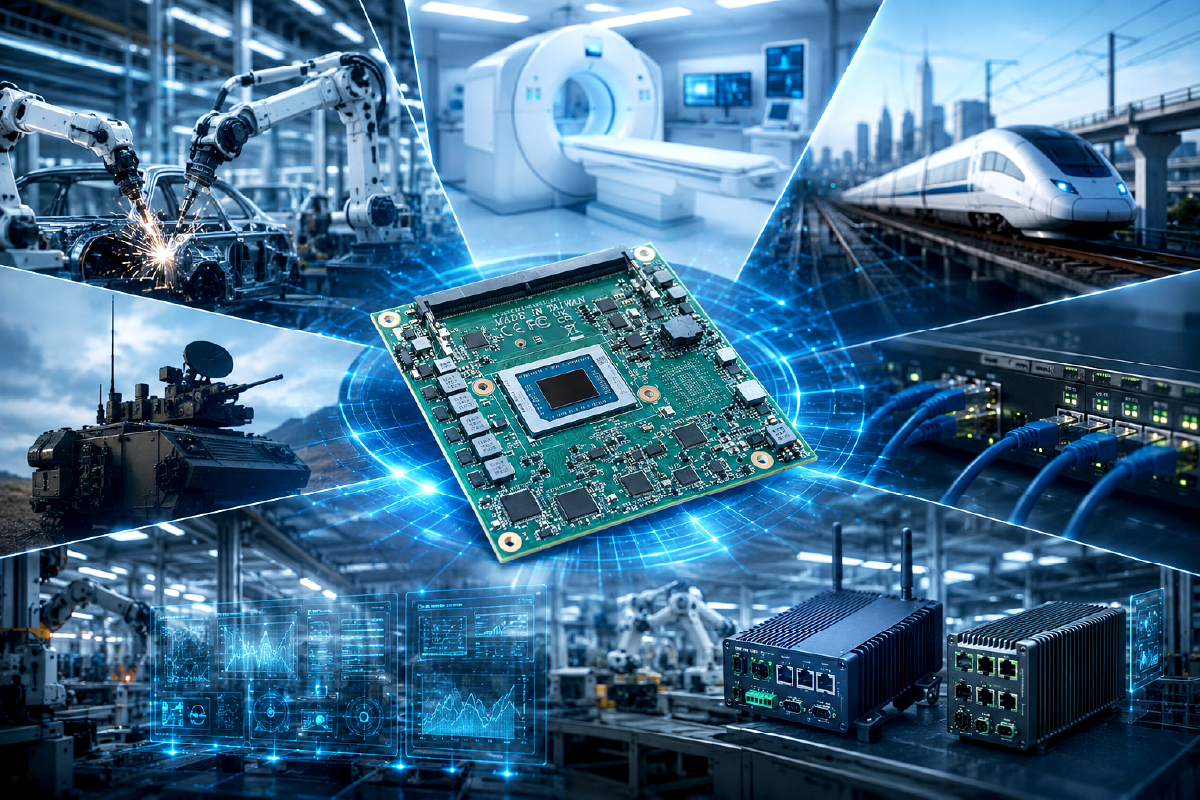
In industrial applications, system design is facing an increasingly clear turning point. Consequently, enterprises need computing platforms that can operate reliably, be deployed quickly, scale flexibly, support long-term availability, and continue evolving with different application scenarios. For instance, from smart manufacturing, edge AI, medical imaging, transportation, defense systems, networking equipment, and IoT gateways, various vertical applications are introducing higher-density sensors, larger volumes of data acquisition, more complex real-time analytics, and stricter reliability requirements. Ultimately, these changes are transforming industrial computing from a back-end control or data-recording device into the core foundation for on-site intelligence, equipment connectivity, and real-time decision-making.
Against this backdrop, traditional motherboards or fully customized single-board designs still provide application value, but they often create greater development and operational pressure in terms of product life cycle, design flexibility, upgrade efficiency, and long-term maintenance. Furthermore, many development projects and applications must integrate the CPU, memory, display, networking, storage, I/O, AI acceleration, and power management within a limited space. It must also address the certification, security, temperature, vibration, electromagnetic compatibility, and long-term supply requirements of different markets. As a result, if a complete motherboard must be redesigned every time the processor generation changes or application requirements evolve, the development timeline will be extended, while validation costs and supply chain risks will also increase.
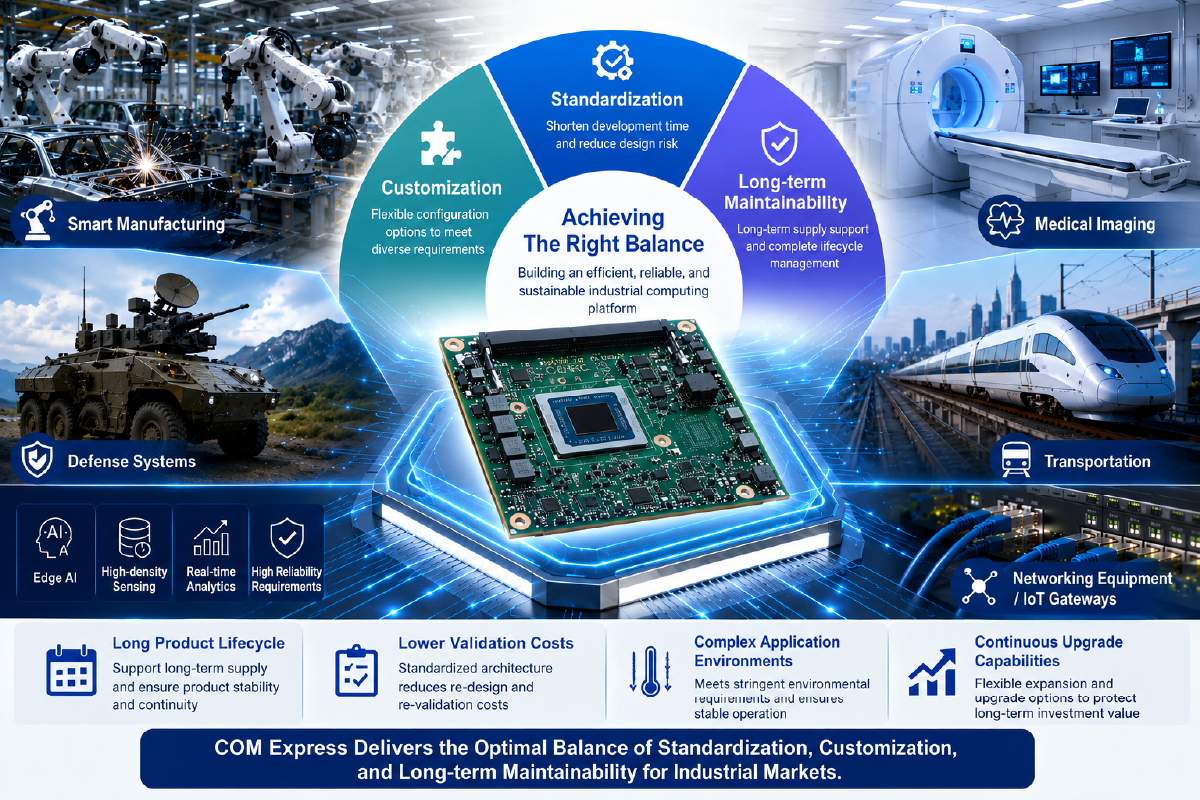
Therefore, COM Express has emerged as an important modular computing standard in the industrial computer market in response to these industry requirements. It consolidates core computing functions into a standardized Computer-on-Module and connects to the I/O, power, mechanical design, and external devices required by different applications through a customized carrier board. In fact, the value of COM Express is not merely to reduce hardware size, but to separate the computing core from the application interface. Consequently, this allows system development to balance standardization, customization, and long-term maintainability. This architecture is especially suitable for industrial markets with long product life cycles, high validation costs, complex application environments, and continuous upgrade requirements.
In recent years, system architectures in industrial environments have rapidly shifted toward data-driven and intelligent control. AOI equipment, machine vision inspection systems, semiconductor packaging equipment, AGVs/AMRs, robotic arms, energy management systems, and production line monitoring platforms in smart factories all require real-time processing of images, sensor data, equipment status, and control signals at the edge. Similarly, transportation and railway systems must reliably process in-vehicle communication, passenger information, safety monitoring, positioning data, and remote maintenance. Meanwhile, medical equipment must balance high-resolution image processing, low-latency data transmission, reliable operation, and regulatory requirements. In addition, networking and defense applications place even greater emphasis on high-speed data exchange, cybersecurity, durability, and long-term availability.
Although these applications belong to different markets, the core challenges behind them are highly similar.
Systems require higher computing performance, while terminal devices are constrained by space, power consumption, and thermal conditions.
Product life cycles are becoming longer, yet CPU, memory, I/O, and operating system platforms continue to evolve.
Application scenarios are highly fragmented. Different customers may require different LAN, USB, PCIe, CAN, MIPI, DisplayPort, LVDS, SATA, NVMe, or wireless communication configurations.
Industrial markets generally cannot change platforms frequently, because every change may involve revalidation, software adjustment, customer-side testing, and supply chain management.
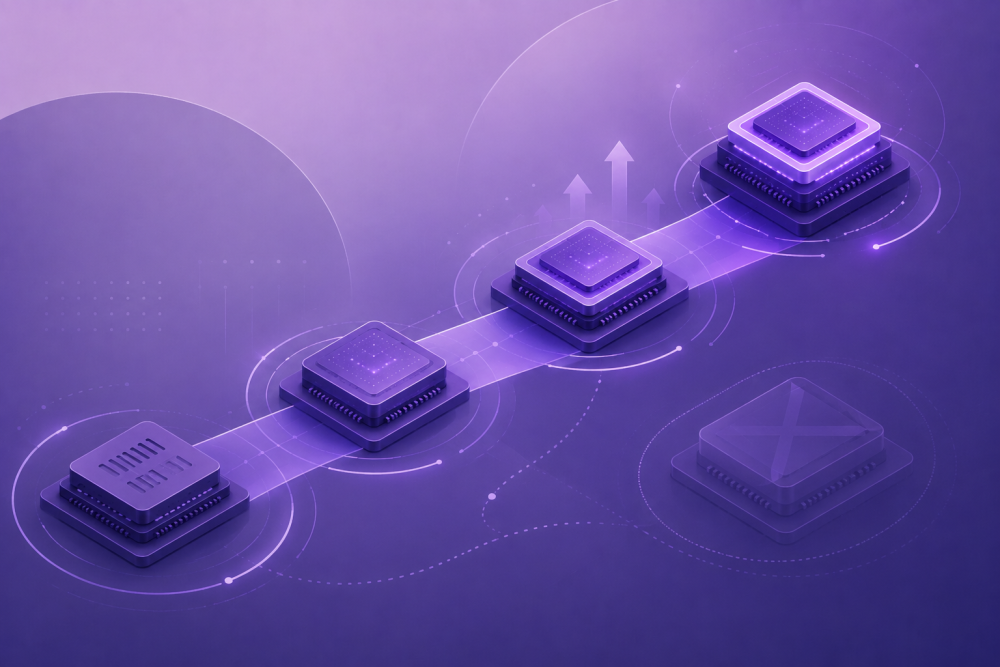
For system integrators and equipment manufacturers, this means that simply pursuing higher specifications is no longer enough to create a competitive advantage. What truly matters is how to strike the right balance among performance, power consumption, size, I/O, reliability, upgrade cycles, and supply stability. The modular architecture of COM Express directly addresses this requirement. It allows customers to upgrade processor modules across different generations without significantly changing the carrier board or system mechanics. This shortens product revision cycles, reduces repeated design costs, and improves platform continuity.
COM Express is a Computer-on-Module standard defined by PICMG and is mainly used in compact, high-reliability embedded computing systems with long life-cycle requirements. Unlike traditional motherboards, COM Express integrates the CPU, chipset, memory, BIOS, power management, and high-speed signal interfaces onto a single module. This module connects to the carrier board through standardized board-to-board connectors. The carrier board is then designed according to the actual application requirements, including I/O, power input, connector placement, mechanical mounting, thermal solutions, and expansion functions.
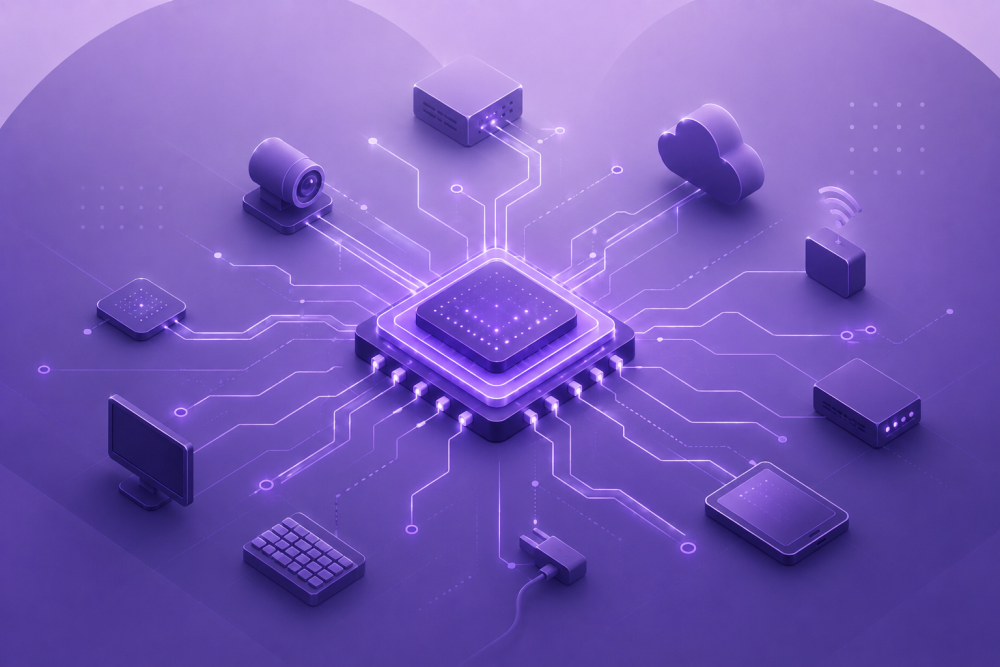
From a system architecture perspective, COM Express can be viewed as a design model that standardizes the computing core while customizing the application interface. The COM module is responsible for the processor platform and primary computing capability, while the carrier board interfaces with field devices and application-specific requirements. For example, medical equipment may require high-resolution display, stable image capture, isolation design, and long-term supply support. Networking equipment may emphasize multi-port high-speed Ethernet, PCIe expansion, and data throughput. Transportation applications may require M12 LAN, CAN Bus, GPS, LTE/5G, wide-voltage input, and vibration-resistant connectors.
This division of roles gives COM Express three core values in the industrial computer industry.
Customers do not need to design a complete CPU motherboard from the ground up. Instead, they can adopt a validated COM Express module and focus R&D resources on carrier board design, mechanical integration, thermal design, I/O, and application software integration. This is especially important for industrial markets that need to launch new equipment quickly.
I/O requirements vary significantly across vertical markets, and standard motherboards often cannot fully meet application-specific needs. Through carrier board customization, customers can optimize the design according to equipment space, connector placement, signal routing, power conditions, and external devices without compromising the overall system architecture.
Industrial equipment typically requires long-term operation and maintenance, and some applications require stable supply for more than ten years. COM Express allows customers to upgrade or replace processor modules under the same carrier board architecture, reducing the risk of complete system redesign caused by platform end-of-life or insufficient performance.
The true value of COM Express lies in its role as a system platform that supports long-term product strategy. For industrial computer vendors and equipment manufacturers, standardization and customization often appear to be contradictory. Standardization can reduce costs, improve compatibility, and accelerate adoption, while customization can meet the special requirements of vertical applications. The modular design of COM Express brings these two needs together within a single architecture.
At the standardization level, COM Express defines module sizes, connectors, signal assignments, and major interfaces, allowing different generations of modules to maintain a certain degree of design continuity. The form factors include Mini, Compact, Basic, and Extended, which can be selected based on space, power, and performance requirements. Different Types correspond to different I/O configurations. For example, Type 6 is commonly used in high-performance industrial control, vision systems, and multimedia applications. Type 7 is more focused on headless, high-speed networking and edge server applications. Type 10 is suitable for compact, low-power embedded devices. This layered design enables COM Express to cover a broad range of needs, from low-power control to high-performance edge computing.
At the customization level, the carrier board can be freely designed according to the end application. Industrial automation equipment may require multiple isolated I/O channels, COM, GPIO, EtherCAT, or CAN. Medical imaging systems may require high-resolution image output and stable storage. Transportation equipment may require automotive-grade or railway-grade connectors, wide-voltage input, and vibration-resistant design. Edge AI systems may require PCIe expansion, AI accelerator cards, NVMe storage, and high-speed image input.
More importantly, COM Express can reduce the impact of platform transitions on customers. When processor generations are upgraded, AI inference requirements increase, operating systems are updated, or memory standards evolve, equipment manufacturers can first evaluate replacing the COM module instead of immediately redesigning all I/O and mechanical structures. For customers that need to maintain equipment over the long term, launch product generations in phases, or serve multiple industry applications at the same time, this represents a critical business value.
As edge AI, smart manufacturing, and industrial IoT accelerate real-world deployment, the application scope of COM Express has expanded from traditional embedded control to more advanced scenarios. In the past, industrial computers were mainly responsible for data acquisition, equipment control, and human-machine interfaces. Today, many systems must also analyze images in real time, execute AI inference, connect to cloud platforms, support remote management, and collaborate with PLCs, sensors, cameras, motion controllers, MES, SCADA, or cloud data centers. These new requirements make COM Express an important option in edge computing architectures.
In edge AI applications, COM Express can serve as the computing core of a high-performance inference system, working with GPUs, NPUs, VPUs, or AI accelerator cards to process image recognition, defect detection, object detection, behavior analysis, and real-time decision-making. For machine vision, smart retail, traffic monitoring, semiconductor inspection, and automation equipment, AI is no longer only a cloud-based analytics tool. It must complete inference on site in real time to reduce latency, lower bandwidth load, and improve system responsiveness.
In industrial automation and industrial control applications, COM Express can support machine control, data acquisition, vision inspection, motion control, and production line monitoring. Because factory equipment usually needs to operate continuously for long periods and may be exposed to dust, vibration, electromagnetic interference, and temperature fluctuations, platform stability, thermal design, I/O reliability, and long-term supply are all critical. The modular design of COM Express allows equipment manufacturers to configure modules with different performance levels under a fixed mechanical and I/O architecture, enabling a more flexible product portfolio.
In transportation and smart railway applications, COM Express can be used in in-vehicle information systems, passenger information systems, video surveillance, roadside equipment, signal control, fleet management, and environmental monitoring. These applications emphasize real-time data transmission, stable communication, low-latency processing, wide-temperature operation, and vibration-resistant design. When transportation systems introduce AI-based video analytics, passenger safety monitoring, abnormal event detection, and predictive maintenance, the edge side requires a more reliable computing core to support real-time decisions and remote management.
In IoT and smart infrastructure, COM Express can serve as a data aggregation and edge gateway platform that connects various sensors, controllers, and communication modules. From smart energy, smart buildings, and environmental monitoring to public safety systems, IoT applications often require long-term deployment in different environments and must support wired, wireless, cellular communication, and cloud platform integration. The highly flexible I/O and upgradeable architecture of COM Express help reduce repeated development costs across different IoT projects.
From a market perspective, COM Express is not an isolated product category. It sits at the intersection of multiple growth markets, including embedded computing, Computer-on-Module, edge computing, and industrial IoT. Overall, the Computer-on-Module market is expected to reach a multi-billion-dollar scale by 2035.
This growth momentum is mainly driven by three directions. First, edge computing demand continues to rise, with more AI inference, data preprocessing, and real-time control required to take place on site. Second, industrial automation and smart manufacturing are driving equipment upgrades, increasing demand for high-performance, low-power, long-life-cycle modular platforms. Third, vertical markets such as transportation, medical, defense, and networking have higher requirements for reliability, maintainability, and long-term supply, making modular design more valuable as part of a product strategy.
It is worth noting that the growth of the COM Express market does not come only from the increasing number of new devices, but also from rising system complexity. When equipment requires more cameras, higher-resolution images, faster networks, larger data volumes, greater AI computing capability, and more stable remote management, customers place greater emphasis on whether the platform can support future upgrades. With its dual advantages of standardized modules and customized carrier boards, COM Express has become a long-term option in many industrial system designs.
The future development of COM Express will be closely linked to edge AI, high-speed I/O, heterogeneous computing, cybersecurity, remote management, and long-life-cycle design.
Five key trends are shaping the future value of COM Express in edge computing.
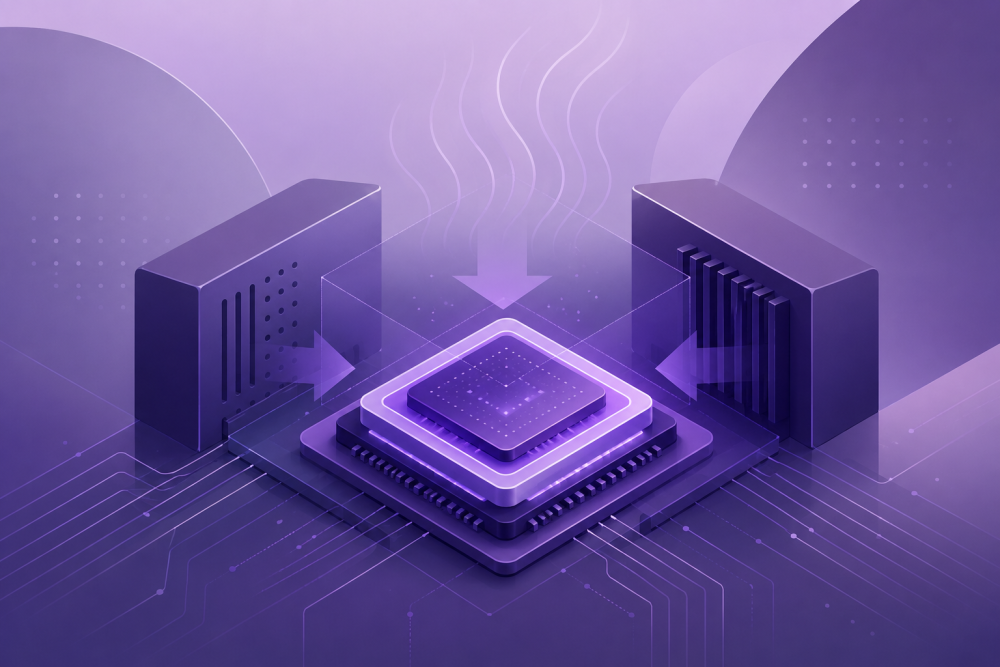
The first trend is the simultaneous pursuit of high performance and low power consumption. Specifically, industrial equipment needs greater computing performance to support AI, imaging, networking, and data analytics, yet the edge side is often limited by power, thermal, and space constraints. As a result, future COM Express modules will continue to adopt more advanced processor platforms, hybrid-core architectures, low-power designs, and more efficient memory technologies, enabling systems to deliver stronger edge computing capabilities within limited power budgets.
The second trend is the upgrade of high-speed interfaces. As demand increases for image acquisition, AI acceleration, and high-speed data transmission, PCIe Gen4, USB4, high-speed Ethernet, NVMe, and multiple display outputs will become more important design priorities. Moreover, for machine vision, semiconductor inspection, networking equipment, and edge servers, high-speed I/O is not merely a specification upgrade. It is a key factor that determines whether the system can process large volumes of data in real time.
The third trend is the integration of AI and heterogeneous computing. Future industrial applications will not necessarily rely only on the CPU. Instead, they will combine CPU, GPU, NPU, VPU, FPGA, or external AI accelerator cards based on workload requirements. COM Express can support different acceleration approaches through carrier board PCIe, M.2 design, allowing customers to select the most suitable computing combination according to application needs.
The fourth trend is remote management and system maintainability. Industrial equipment is deployed across distributed locations, including factories, stations, vehicles, outdoor cabinets, and medical environments. As the number of devices increases, remote monitoring, firmware updates, power management, health status reporting, and predictive maintenance will become important capabilities for reducing operating costs. Therefore, future COM Express systems will need not only stable hardware, but also software tools and management platforms that help customers improve overall maintenance efficiency.
The fifth trend is long-term supply and platform continuity. Industrial computer customers usually do not purchase only a single module; they need a product strategy that can continue for many years. COM Express allows customers to plan module options across different performance levels and processor generations under a fixed carrier board and system design, reducing platform transition risks and improving product line management efficiency.
Typical Scenario
Medical imaging, endoscopy systems, diagnostic equipment, patient monitoring
Key Requirements
High-resolution display, low-latency image processing, long-term supply, reliability, medical-grade system integration
Core Value of COM Express
Supports high-resolution image processing and stable long-term operation, helping medical equipment extend product life cycles
Typical Scenario
Rugged computers, mission control, radar and sensor data processing
Key Requirements
Ruggedized design, wide-temperature operation, shock and vibration resistance, cybersecurity, high-speed data processing
Core Value of COM Express
Provides modular upgrade capability, suitable for long-life-cycle programs and harsh-environment deployments
Typical Scenario
Edge servers, firewalls, SD-WAN, 5G / private network equipment
Key Requirements
Multi-port Ethernet, PCIe, high-speed storage, cybersecurity, headless computing
Core Value of COM Express
Supports high-speed networking and PCIe expansion, meeting network traffic processing and packet-processing requirements
Typical Scenario
In-vehicle systems, smart railway, roadside equipment, fleet management, passenger information systems
Key Requirements
M12 LAN, CAN, GPS, LTE / 5G, wide-voltage input, shock and vibration resistance, wide-temperature operation
Core Value of COM Express
Supports stable communication, real-time data processing, and deployment in harsh environments
Typical Scenario
AI image analytics, object detection, smart surveillance, machine perception
Key Requirements
PCIe, M.2, NVMe, high-speed image input, AI acceleration, thermal design
Core Value of COM Express
Can be integrated with GPU, NPU, VPU, or AI accelerator cards to support real-time edge inference
Typical Scenario
PLC gateways, HMI, motion control, machine vision, AOI, production line monitoring
Key Requirements
GPIO, COM, USB, LAN, CAN, EtherCAT, real-time control
Core Value of COM Express
Enables customized I/O through carrier board design, supporting integration requirements across different equipment platforms
Typical Scenario
Smart energy, smart buildings, environmental monitoring, connected equipment gateways
Key Requirements
Multi-protocol connectivity, low power consumption, cloud connectivity, remote management, data security
Core Value of COM Express
Serves as a sensor data aggregation and edge analytics platform, reducing repetitive development costs across projects
Typical Scenario
Die sorting, wafer saw, die bonding, AOI inspection
Key Requirements
PCIe expansion, frame grabber, motion control, high-speed storage, real-time image analysis
Core Value of COM Express
Supports high-precision vision, motion control, and large-volume image data processing
The value of COM Express comes from the way it reshapes industrial computer product strategy. As a modular platform that can support multiple product lines, multiple generations of upgrades, and diverse vertical applications, COM Express separates the computing core from the application interface, allowing equipment manufacturers to balance standardization and customization. Furthermore, it shortens development cycles, reduces platform transition risks, improves product continuity, and enables customers to respond more easily to future changes in processor technologies, AI acceleration, high-speed I/O, and remote management requirements. As industrial applications continue moving toward intelligence, connectivity, and real-time operation, COM Express will continue to play an important role in edge computing architectures. It allows industrial systems to maintain upgrade flexibility on a stable and reliable foundation, while enabling different industries to adopt next-generation computing technologies with lower risk.