%%PW_PROTECTED_BLOCK_108%%

Reliable Computing in Harsh Environments

Key Design Considerations for Rugged Panel PCs
Reliable Computing in Harsh Environments
Key Design Considerations for Rugged Panel PCs and AI Inspection in Food Processing

Table of Contents

Computing and Operational Requirements in Harsh Environments

Industrial operations depend heavily on equipment connectivity and real-time data. Computing platforms serve as central hubs for smart manufacturing, supporting
equipment status monitoring, quality assessment, and production traceability. In recent years, AI vision inspection has also gained traction on production lines to help identify anomalies and improve quality control. If a computing platform is interrupted or fails, access to process information, inspection records, and exception handling may be affected. Reliability under actual deployment conditions is therefore a key consideration for on-site computing.

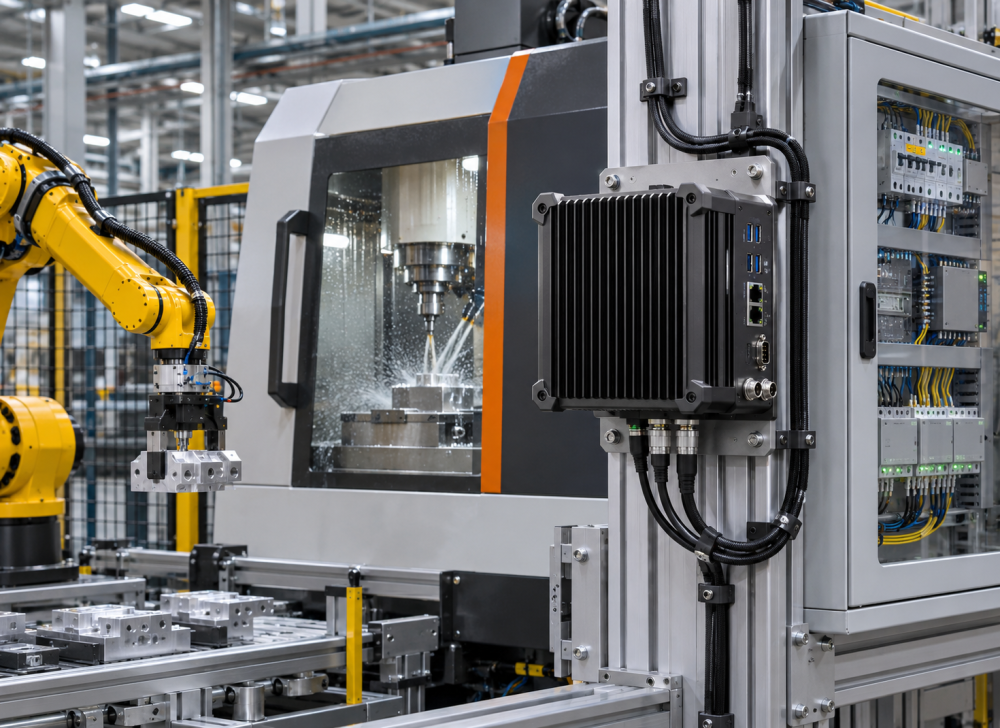
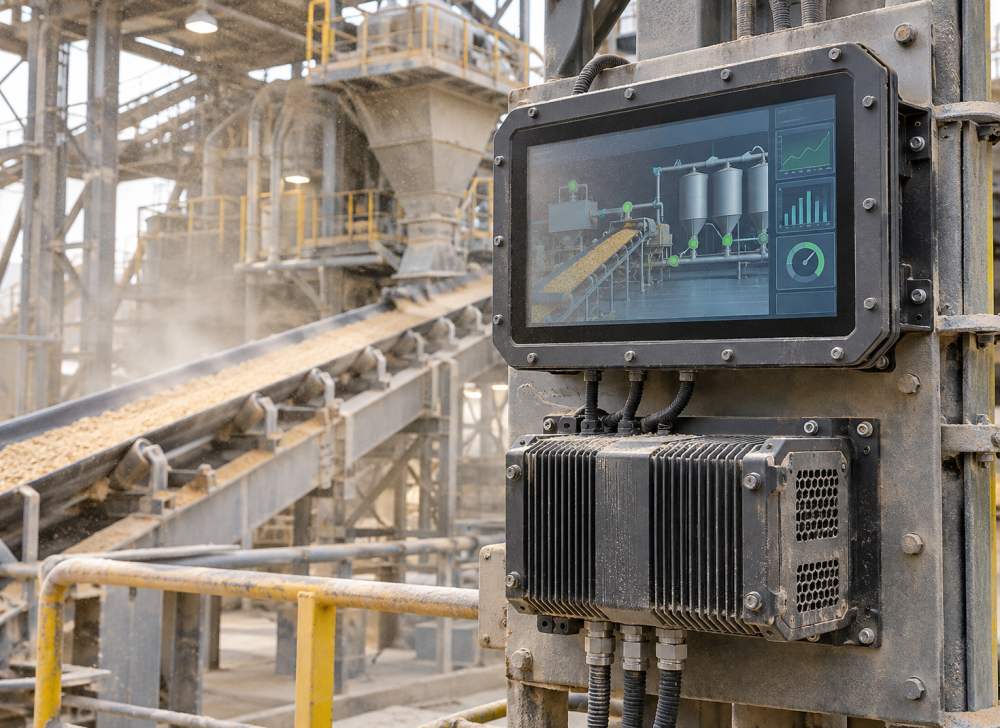
Installed alongside production equipment, rugged panel PCs integrate computing, display, and touch functions, allowing operators to review equipment status, adjust
settings, and respond to exceptions at the point of use. Depending on system configuration, the same platform may also handle image processing and AI inference. Dust and moisture can affect cooling and circuit reliability, vibration can loosen connections, and temperature changes can disrupt startup or continuous operation. Gloves, water droplets, and cleaning procedures further complicate touch interaction. Meeting these requirements calls for enclosure protection, internal thermal management, and interface design that work together to maintain responsive operation under the intended workload.

What Makes a Rugged Panel PC Truly Reliable?

Full-Enclosure Protection and Touchscreen Design for Harsh Operating Conditions

IP66-IP69K Protection
Portwell Logo_only oaoa

IP66 / IP69K Protection

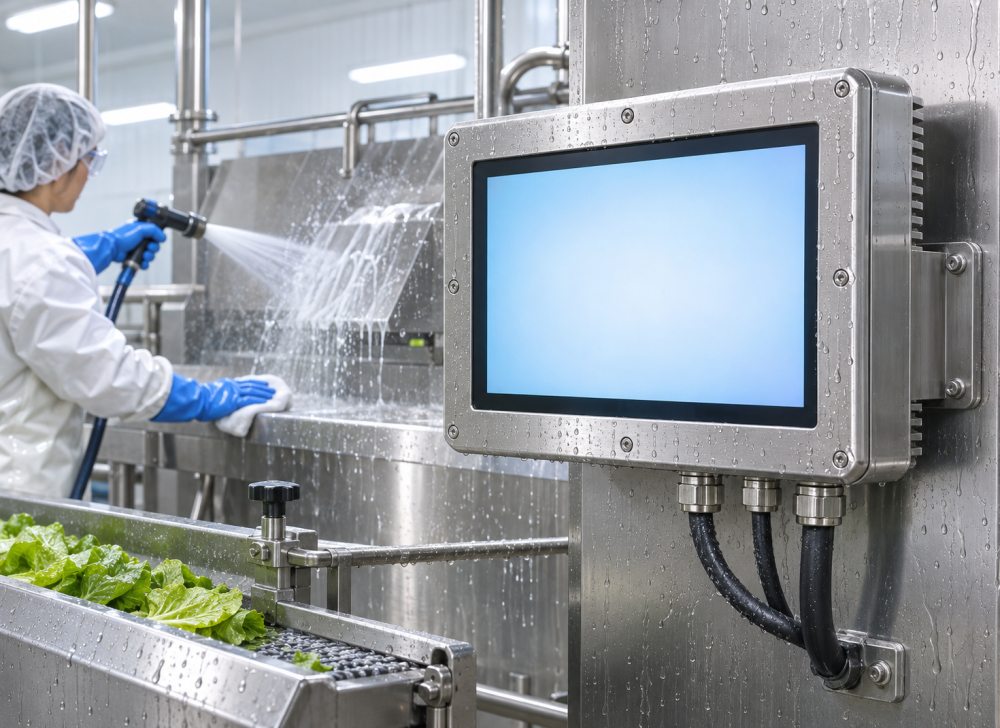
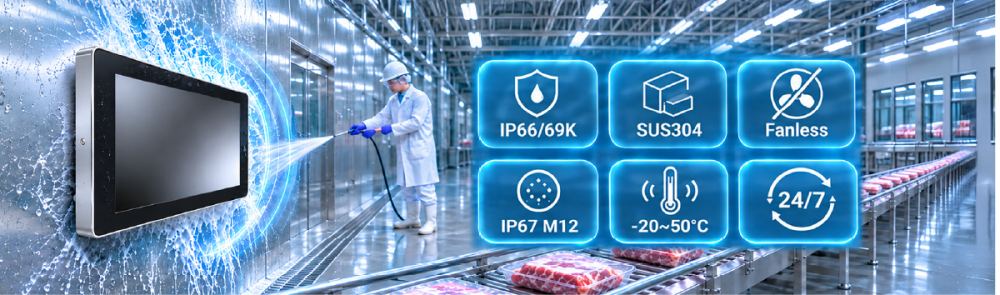
To keep a panel PC operating when exposed to dust, splashes, or washdown, protection must extend to the entire system. The front panel, enclosure, and external connections after cabling should all be considered. Depending on deployment requirements, the system may use IP66/IP69K protection, with seals at the front-panel joints and rear cover, together with M12 connectors and mating cables of the appropriate protection rating. The actual spray or washdown conditions the assembled system can withstand depend on its IP rating, test configuration, and installation requirements.

Stainless Steel Enclosure
Portwell Logo_only oaoa

Stainless Steel Enclosure

Cleaning frequency and cleaning agents also influence material selection. Depending on the application, the enclosure may use SUS304 or SUS316 stainless steel, while the panel and seals should be checked for chemical compatibility to limit degradation from repeated cleaning. Smooth surfaces and easy-to-wipe joints make residues easier to remove and inspect. For gloved operation, glove thickness, material, and water droplets on the panel may affect touch performance. Controls should be sized and spaced for gloved use, and an input-lock function during cleaning can help prevent unintended commands. Together, these measures align the
operator interface with site protection and cleaning procedures.

Thermal Management and Startup in Sealed Enclosures

Wide Operating Temperature
Portwell Logo_only oaoa

Wide Operating Temperature

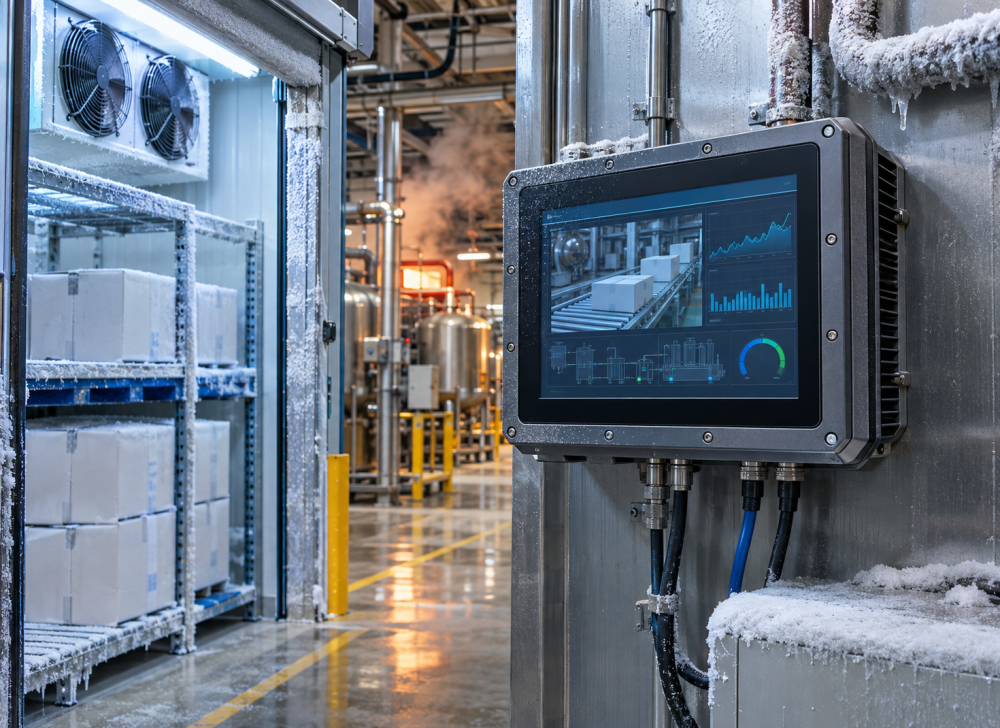
A sealed enclosure limits the use of outside air to cool internal components directly. Fanless systemstherefore need heat pipes and heat sinks to transfer and dissipate heat, supported by motherboard power design that limits the thermal load from continuous computing. At elevated ambient temperatures, BIOS thermal management policies may adjust processor operating speeds to control power draw and heat buildup. Low temperatures, by contrast, can affect startup. Where needed, a preheating circuit can warm internal circuitry before the system begins booting. The LCD, touchscreen, memory, and storage must also operate within the intended temperature range so display, user input, and data access remain available after startup.

Temperature fluctuations may also create pressure differences across the enclosure. Some platforms use a protective PTFE vent membrane to help equalize pressure. Where condensation is a concern, ventilation and anti-condensation measures should be assessed against temperature and humidity conditions while maintaining the required whole-system protection.

Firmware and Software Coordination for System Recovery

System Recovery
Portwell Logo_only oaoa

System Recovery

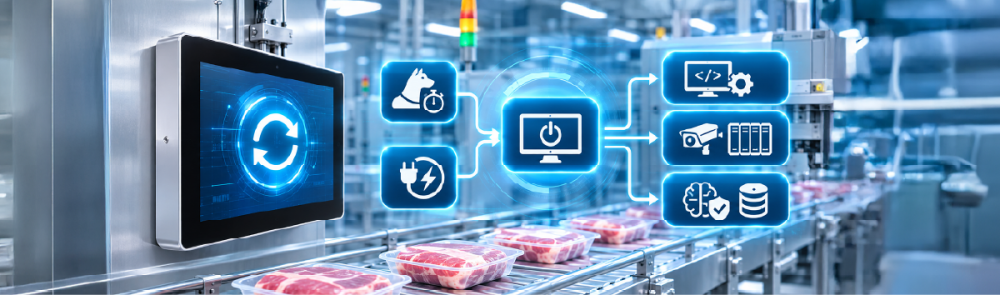
When an application hangs or power is interrupted, restarting the equipment is only the first step; its previous operation must also be restored. A watchdog timer (WDT) can work with monitoring software that regularly refreshes a timer. If the monitoring software fails to report within the configured interval, the watchdog can restart the system. The device can also be configured to power on automatically when power returns, reducing manual intervention. After booting, application software must load its settings, reconnect peripherals, and confirm that data updates have resumed.

These are major design considerations for rugged panel PCs. Available functions vary by product series, optional features, and custom configurations. Operator workflows and operational recovery must be validated through software integration.

Industrial Environments and Rugged Design Priorities

Rugged panel PC requirements vary across industrial production environments. The following table summarizes four common scenarios and their key design considerations.

Washdown and sanitation areas

Main Environmental Challenges

Splash exposure, repeated cleaning, and contact with chemicals

Rugged Design Priorities

Whole-system sealing, material compatibility, and touch operation

Dusty processing areas
Main Environmental Challenges

Dust, debris, and buildup of contaminants

Rugged Design Priorities

Dust-resistant construction, thermal management, and cleaning access

Areas with high, low, or fluctuating temperatures
Main Environmental Challenges

Heat sources, cold startup, and condensation risk

Rugged Design Priorities

Thermal management, wide-temperature components, and pressure equalization

Machinery and automation equipment
Main Environmental Challenges

Vibration, electromagnetic interference, and loose connections

Rugged Design Priorities

Secure mounting, cable retention, and immunity to interference

Areas with combustible dust or gases require a separate assessment of suitable explosion-protected equipment and the scope of applicable certifications.

Edge AI Inspection on Food Production Lines

Edge AI Inspection on Food Production Lines
Portwell Logo_only oaoa

Vision Inspection and Hygiene Challenges

Food processing lines must balance production efficiency, quality inspection, sanitation, and product traceability. Natural variations in food shape, color, and texture, combined with reflective packaging and line changeovers, can challenge rule-based machine vision when identifying certain complex features. Computing and operator-interface devices installed near processing equipment must also withstand moisture, liquid splashes, and frequent cleaning. Inspection capability and environmental protection are therefore both important platform design considerations.

Portwell Logo_only oaoa

Unified Edge AI and HMI Platform

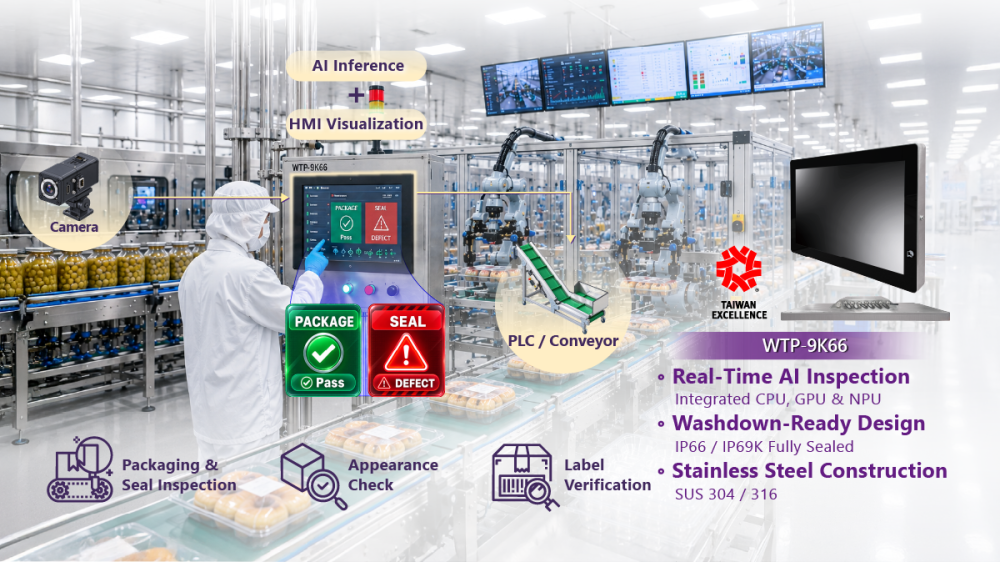
When a platform originally used for equipment monitoring and operation incorporates AI vision inspection, its tasks expand to image acquisition, model inference, and result presentation. An industrial panel PC with AI acceleration resources can distribute computing workloads according to the model and software support, running inspections and providing an HMI on the same platform. Operators can review results, adjust settings, and handle exceptions nearby. Provided performance and interface
requirements are met, this approach may also reduce the need for separate computing devices and data transfers between them, simplifying inspection station configurations.

Portwell Logo_only oaoa

Automated Line Control and Traceability

In a typical workflow, industrial cameras capture images of products or packaging. AI models running on the platform identify potential defects in appearance, seals, or labels. Results are shown on the HMI and sent through application software to a PLC, which carries out grading, rejection, or other equipment actions according to production-line logic. Inspection information can also be linked to an MES or quality management system to support production records and traceability. Communication interfaces, software integration, and line timing must be validated for each application.

WTP-9K66: Integrated Edge Computing and HMI Platform

CPU, GPU, and NPU Processing for AI Inspection and On-Site Operation

CPU, GPU, and NPU Processing for AI Inspection and On-Site Operation

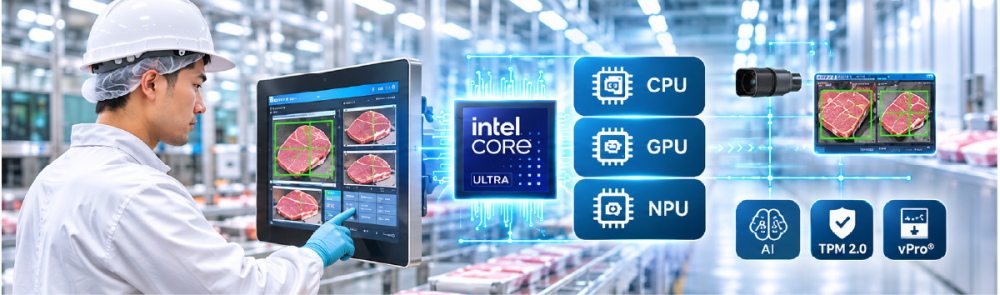
The WTP-9K66 series features an Intel® Core™ Ultra 5 processor 125U with integrated CPU, GPU, and NPU resources for edge AI workloads. Paired with industrial cameras, AI models, and vision application software, it can perform image analysis for food appearance, packaging, labels, and seals at the production line, shortening the
processing path from AI decisions to PLC control. TPM 2.0 and Intel® vPro® technology, supported according to the CPU configuration, can also enhance device security and system management.

IP69K Stainless-Steel Protection for Reliability in Hygiene-Critical Areas

IP69K Stainless-Steel Protection for Reliability in Hygiene-Critical Areas

A sealed, CNC-machined flat-front SUS304 stainless steel enclosure with IP66/IP69K protection and a fanless design can address frequent washdowns, moisture, and
corrosive conditions on food production lines. Optional IP67-rated M12 waterproof interfaces are available. Together with i-Control thermal management and power saving technology and a customizable -20°C to 50°C operating temperature option, the design can support 24/7 operation while helping reduce maintenance needs.

HMI, PLC, and MES Integration for Control and Quality Traceability

HMI, PLC, and MES Integration for Control and Quality Traceability

Through suitable communication interfaces and application software, the WTP-9K66 can integrate industrial cameras, barcode/RFID devices, PLCs, and other inspection
equipment. AI decisions can be sent to a PLC for grading, rejection, or equipment actions, while inspection data can be linked to MES, SCADA, or quality databases. This
supports an integrated information flow from quality decisions and equipment control to batch-level traceability.

Watchdog and Power-Restore Startup for Recovery After Interruptions

Watchdog and Power-Restore Startup for Recovery After Interruptions

The WTP-9K66 BIOS provides watchdog timeout reset and power-restore startup settings, allowing the system to restart after a watchdog timeout or boot automatically
when power returns, reducing manual startup. With application software reloading settings, reconnecting cameras and PLCs, and checking model and data status, a
recovery workflow can be established from system restart through resumption of inspection.

About Portwell

Portwell provides embedded computing platforms and design and manufacturing services (DMS), including hardware design, BIOS/firmware customization, and system  validation. Through cross-disciplinary engineering collaboration, Portwell supports requirements analysis, design and development, validation, and production readiness, helping customers assess the integration conditions for computing platforms and peripheral devices. For embedded device development or platform customization, contact Portwell to discuss suitable products and services.

Subscribe

Press Releases Subscribe Form